Two days before Christmas Eve, I attended a wedding. The bride is the head nurse at Fondasa Haiti, one of ESF’s partner agencies.
The wedding was in almost all regards exactly like a standard American Christian wedding. Even the beauty parlor where we went beforehand to so my boss could have her hair straightened and curled was eerily similar to any Black American beauty salon in the States (I suspected, she confirmed). There were, however, a few striking cultural differences. First, I was surprised by the timing. The invitation said 4:00. Though we were running late and arrived at 4:20, we were the first guests. More striking than that, the lack of guests did not stop the ceremony from beginning about five minutes later when the limousine carrying the bridal party arrived: the music started, and the bridesmaids paced down the aisle of the virtually empty church! The guests arrived over the course of the next hour or so, such that the ceremony concluded to a full house. I assume it’s to make up for the lack of initial audience that the reception began with a complete repetition of the wedding procession.
Second, people not only took pictures throughout the ceremony, but in fact got up out of their seats to crowd around the happy couple at the front of the church, snapping close-ups of them saying their vows, exchanging rings, etc. At times the participants were completely obscured by the profusion of waving cameras and mobile phones. Their special moment is very well documented indeed.
It was a lovely wedding. Selfishly, I enjoyed having an excuse to wear something other than scrubs. I also appreciated the opportunity that the wedding afforded to reflect on the kind of arresting juxtapositions that you only find in circumstances such as those in Port-Au-Prince today:
• The experience of being all dressed up in dainty gold high-heeled sandals and a silk sundress, picking my way over concrete rubble to climb into a dented and much-abused four-wheel drive;
• The image of the somewhat worse-for-wear limousine crawling through the crowded and narrow third-world street, and coming to a stop in front of the church opposite the sagging, folded concrete slabs of a house that remains as it was when it collapsed in the earthquake almost exactly a year ago;
• The view of a teenage boy and his kid sister, dressed respectively in an immaculate formal suite and a pristine white first-communion dress complete with white floral headdress and veil, stepping carefully around the muddy drainage ditch in the otherwise dusty road, making their way past piles of rubble and a herd of smelly marauding goats;
The reception was held in a nice hotel in a wealthier residential neighborhood. The houses were large, with gardens and green trees, and surrounded by high cement walls with iron gates. Despite the fact that most of the houses in this neighborhood appeared intact, the vast majority of them seemed uninhabited. The darkened windows by themselves didn’t necessarily imply an empty house, since here even large and fancy houses usually lack electricity. A stronger clue was the presence of tents in the front yard, the driveway, or the street in front of the gate. Buildings that look sound are not necessarily so, and my colleagues tell me of people with sound houses who are nevertheless too scared and traumatized to live in them.
(Apologies, these pictures are not up to our usual standard: the next batch will be better)
Friday, December 24, 2010

Italy Day 2: Christmas Eve
We started the day on a decadent note by having half a Panettone for breakfast. If you are not familiar with the traditional Italian puffy Christmas fruit cake and its bulbous boxes, picture a squat cylinder with an orb top for the shape, the color of caramel or dark toast. Its consistency is a combination of slightly stale Italian bread and a croissant, airy and fun to pull apart with the fingers but not very layered. Its flavor is dominated by the scattered embedded pieces of citron (candied orange, lemon, and lime peel).
Rather than visit many tourist destinations, we made the city itself our destination of the day, wandering the streets and looking at the streets themselves and the walls surrounding them. Siena is incredibly old, settled at least as far back as the Etruscans of 700 BC (i.e. pre-Roman), with bits of their stonemasonry still in evidence. Most of the existing buildings are from more around the 12-1300s, with some 1500s thrown in. Because Florence dominated economically and politically from 1348 on (thanks to Siena being decimated by the plague and being hopeless in battle), Siena, like York in England, didn’t have the money to keep up with the architectural times, and therefore remains an unsurpassed time capsule of medieval architecture.
Perched on a small series of hill ridges creased with steep valleys, tiny Siena (dense population steady at 60,000 for the last 1000 years) is dominated by brick and stone just the color your Crayola upbringing would suggest. Its antiquity and the extremely steep topography thwarts any relation to modern city planning, tending more towards a street map like a bowl of spaghetti or the efforts of a drunk maze designer. The streets have about three possible widths: barely wide enough to squeeze two Fiats past each other (which they drive buses down), barely wide enough for one Fiat and a Vespa to share, or too narrow or steep for any Fiats and therefore devolving into a staircase. To say this city isn’t accessible to the physically handicapped is a gross understatement. I particularly enjoyed the errant angles and slopes of the streets, and the frequency with which the buildings on either side of the street actually touched at the top or leaned into one another with narrow arches, creating frames for the views beyond.
My mother and I particularly enjoyed the walls of the buildings (as well as the old city walls) because of the way they had been patched up and had windows and doors added and filled in and reinforced and painted and broken etc. so many times over their existences. It brought strongly to mind the philosophical question of identity and physical continuity, i.e. if over time you replace all the parts of a thing, is it still the same thing as the original thing? Any answer would still have these walls being genuinely old, though, since most of the repairs etc were themselves ancient.
We covered a fair bit of the city in our wanderings, made easier by my sister’s familiarity with its layout, allowing us to stride blindly after her. When Petra and I visited Siena briefly years ago, we spent most of our time lost and consulting our map. This time, we saw the Piazza Gramsci at which we arrived and the Porta Camollia near which we are staying, the gargantuan and useless Medici fort, the length of the Via Di Camollia/Montanni/di Sopra/di Citta (as if the map weren’t confusing enough, the streets change names every few blocks), the grand Il Campo plaza (generally agreed to be the best plaza in all of Italy and recognizable from such recent films as James Bond Quantum of Solace and the red cloak scene from that Twilight movie), some of the ancient Jewish ghetto, the environs of the University, the oldest spot in the city (Castel Vecchio which is more like a courtyard with a garden-shack of a stone tower), and every tiny slanting street in between.
My sister Lisa made sure to treat us to coffees at a tiny local café as soon as possible. We all had café macchiato, which was just as strong and tiny and generally Italian as one could wish. Ma didn’t like it at all, made amazingly funny distressed faces, and had a hard time finishing her thimbleful. As she is of the coffee sipping school, I think she rather generally missed the point of it. We will make a second attempt to encourage her Italian coffee appreciation another day.
It was a good day for coffee as it was very rainy at first and remained grey and drizzly rest of the day, though not too cold. Outside stayed a fairly consistent 48 degrees all day. Thanks to the rain, the matte light and shiny streets and profusion of umbrellas made for some great photographic conditions.
We of course took lots of pictures: as we only brought the one camera between us, Ma and I had a back-and-forth photo commentary going all day, improving upon one another’s compositions. It’s a very challenging city to photograph in, though. The composition itself is difficult, not only because of the mental overload of such a visually rich environment, but since the views are very narrow and cropped, it’s nearly always hard to either get far enough away or close enough to whatever the focal point of the frame is. More difficult is the lighting, which has extremes of dark and light in almost every possible frame. A majority of the images we snapped this first day didn’t turn out as we had hoped.
Over lunch we enjoyed a truly grand sweeping vista south from the edge of the old city’s mesa. I certainly didn’t expect turning left from a cramped street through a stone doorway past the University would lead us to a wide green field with olive trees and benches, a modern park built above a recent parking garage but in keeping with what would have been the grounds of an old nunnery. Our food was tasty crunchy hot two-euro things called ciacino like pizza ham and cheese sandwiches.
As a bit of a rest, we visited Lisa’s school. Lisa is working with the head of the Siena School of Liberal Arts and the Getty family to found a new art school, called the Siena Art Institute. They will have art classes as well as artists in residence, workshops, community programs, and more. It will all very high-caliber stuff with a decidedly international bent: English will be the main language of the Institute. They already have lovely premises in an airy, light-filled building near the cathedral in one of the highest and oldest parts of the city. Many of the rooftop and vista pictures you’ll see are from their windows.
To increase the day’s surreal quotient, Babo Natale (i.e. Santa) arrived in one of the city’s ancient plazas via a covered wagon drawn by some pint-sized wet and shaggy draft horses. A ragtag band dressed in Santa-inspired garb played carols lugubriously while children pranced and Santa was much photographed with the tykes and handed out plastic crap toys. The adults all delighted in doffing sparkly red caps, even bedecking the ever-patient horses. Then it was clearly time for more coffee. Ma had tea this time. I had a nearly-perfect cappuccino.
Dinner this night was back at the apartment, light nibbles perched around the tiny flowery kitchen table. Lisa whipped up a delectable appetizer of fresh organic ricotta drizzled with local fresh-pressed olive oil and salt and ground black pepper. Then bread (one puffy and one cracker-like with rosemary) with cheese (soft and hard pecorino) with a chestnut honey and a tomato and pumpkin flower tapenade, accompanied by a local adventurously-non-chianti red from the local Monte Chiaro. For dessert we munched on some hard biscuits (i.e. cookies, related to British digestives, vaguely like graham crackers) called Grancereale, in four varieties: original, crunchy, fruited, and chocolate. My favorites were the crunchy, which lived up to its name and was very buttery, and the chocolate, which was actually rather nutty.
But no, that was not the end of the day, not with my sister at the helm. She sings regularly with a local chorus, which was performing as the choir at the Christmas Eve mass at San Giuseppe’s, the Church of the Onda (i.e. Wave) Contrada, now tucked amongst other brick rambles on a hillside on the south edge of the old city. As they needed more altos, I joined as a ringer with no rehearsal, which was fine because they were very haphazard themselves and it was all Christmas music anyways. I was excited to get to enter the church by an iron-gated courtyard and barred side door rather than the public front door entrance. After making my way up a very worn steep stone staircase about as wide as my hips and high as my shoulders and thanking my blessed stars I wasn’t proportioned like the average American, I joined the cantada in the organ loft, a frighteningly creaky ancient wooden balcony about the size of two twin beds on which about twenty people and the ancient organ were crammed. It gave us a great view from which to see the colorful ornate gilded and frescoed nave and apse of the small sanctuary, and to watch the congregation freely ignore the priest’s long, dynamic, rambling sermon (in Italian so I couldn’t understand a word). Dolphins, light blue, and clouds, and gold were the dominant decorative features, and “bellissimo” was the most common recognizable word. We sang admirably. They gave us each a darling clutch bouquet with pink roses and fluffy greens and a sparkly silver thing in thanks: my inner six-year-old-girl/diva was thrilled.
Though it was already past 11pm, we all trekked from there up to the city’s cathedral, Il Duomo, an old ornate stripey stone thing from the 1200s plunked on a plaza high on one of the hilltops. For the holidays they had uncovered some of the delicate floor murals, which was a treat, and had created not only a giant crèche of incredible levels of tackiness, but had a veritable forest/mountain of poinsettias adding some color to the general zebra/op art/moiré décor. Ma and Lisa stayed for the cultural experience of the endless midnight mass, but I bowed out in favor of sleep.
Rather than visit many tourist destinations, we made the city itself our destination of the day, wandering the streets and looking at the streets themselves and the walls surrounding them. Siena is incredibly old, settled at least as far back as the Etruscans of 700 BC (i.e. pre-Roman), with bits of their stonemasonry still in evidence. Most of the existing buildings are from more around the 12-1300s, with some 1500s thrown in. Because Florence dominated economically and politically from 1348 on (thanks to Siena being decimated by the plague and being hopeless in battle), Siena, like York in England, didn’t have the money to keep up with the architectural times, and therefore remains an unsurpassed time capsule of medieval architecture.
Perched on a small series of hill ridges creased with steep valleys, tiny Siena (dense population steady at 60,000 for the last 1000 years) is dominated by brick and stone just the color your Crayola upbringing would suggest. Its antiquity and the extremely steep topography thwarts any relation to modern city planning, tending more towards a street map like a bowl of spaghetti or the efforts of a drunk maze designer. The streets have about three possible widths: barely wide enough to squeeze two Fiats past each other (which they drive buses down), barely wide enough for one Fiat and a Vespa to share, or too narrow or steep for any Fiats and therefore devolving into a staircase. To say this city isn’t accessible to the physically handicapped is a gross understatement. I particularly enjoyed the errant angles and slopes of the streets, and the frequency with which the buildings on either side of the street actually touched at the top or leaned into one another with narrow arches, creating frames for the views beyond.
My mother and I particularly enjoyed the walls of the buildings (as well as the old city walls) because of the way they had been patched up and had windows and doors added and filled in and reinforced and painted and broken etc. so many times over their existences. It brought strongly to mind the philosophical question of identity and physical continuity, i.e. if over time you replace all the parts of a thing, is it still the same thing as the original thing? Any answer would still have these walls being genuinely old, though, since most of the repairs etc were themselves ancient.
We covered a fair bit of the city in our wanderings, made easier by my sister’s familiarity with its layout, allowing us to stride blindly after her. When Petra and I visited Siena briefly years ago, we spent most of our time lost and consulting our map. This time, we saw the Piazza Gramsci at which we arrived and the Porta Camollia near which we are staying, the gargantuan and useless Medici fort, the length of the Via Di Camollia/Montanni/di Sopra/di Citta (as if the map weren’t confusing enough, the streets change names every few blocks), the grand Il Campo plaza (generally agreed to be the best plaza in all of Italy and recognizable from such recent films as James Bond Quantum of Solace and the red cloak scene from that Twilight movie), some of the ancient Jewish ghetto, the environs of the University, the oldest spot in the city (Castel Vecchio which is more like a courtyard with a garden-shack of a stone tower), and every tiny slanting street in between.
My sister Lisa made sure to treat us to coffees at a tiny local café as soon as possible. We all had café macchiato, which was just as strong and tiny and generally Italian as one could wish. Ma didn’t like it at all, made amazingly funny distressed faces, and had a hard time finishing her thimbleful. As she is of the coffee sipping school, I think she rather generally missed the point of it. We will make a second attempt to encourage her Italian coffee appreciation another day.
It was a good day for coffee as it was very rainy at first and remained grey and drizzly rest of the day, though not too cold. Outside stayed a fairly consistent 48 degrees all day. Thanks to the rain, the matte light and shiny streets and profusion of umbrellas made for some great photographic conditions.
We of course took lots of pictures: as we only brought the one camera between us, Ma and I had a back-and-forth photo commentary going all day, improving upon one another’s compositions. It’s a very challenging city to photograph in, though. The composition itself is difficult, not only because of the mental overload of such a visually rich environment, but since the views are very narrow and cropped, it’s nearly always hard to either get far enough away or close enough to whatever the focal point of the frame is. More difficult is the lighting, which has extremes of dark and light in almost every possible frame. A majority of the images we snapped this first day didn’t turn out as we had hoped.
Over lunch we enjoyed a truly grand sweeping vista south from the edge of the old city’s mesa. I certainly didn’t expect turning left from a cramped street through a stone doorway past the University would lead us to a wide green field with olive trees and benches, a modern park built above a recent parking garage but in keeping with what would have been the grounds of an old nunnery. Our food was tasty crunchy hot two-euro things called ciacino like pizza ham and cheese sandwiches.
As a bit of a rest, we visited Lisa’s school. Lisa is working with the head of the Siena School of Liberal Arts and the Getty family to found a new art school, called the Siena Art Institute. They will have art classes as well as artists in residence, workshops, community programs, and more. It will all very high-caliber stuff with a decidedly international bent: English will be the main language of the Institute. They already have lovely premises in an airy, light-filled building near the cathedral in one of the highest and oldest parts of the city. Many of the rooftop and vista pictures you’ll see are from their windows.
To increase the day’s surreal quotient, Babo Natale (i.e. Santa) arrived in one of the city’s ancient plazas via a covered wagon drawn by some pint-sized wet and shaggy draft horses. A ragtag band dressed in Santa-inspired garb played carols lugubriously while children pranced and Santa was much photographed with the tykes and handed out plastic crap toys. The adults all delighted in doffing sparkly red caps, even bedecking the ever-patient horses. Then it was clearly time for more coffee. Ma had tea this time. I had a nearly-perfect cappuccino.
Dinner this night was back at the apartment, light nibbles perched around the tiny flowery kitchen table. Lisa whipped up a delectable appetizer of fresh organic ricotta drizzled with local fresh-pressed olive oil and salt and ground black pepper. Then bread (one puffy and one cracker-like with rosemary) with cheese (soft and hard pecorino) with a chestnut honey and a tomato and pumpkin flower tapenade, accompanied by a local adventurously-non-chianti red from the local Monte Chiaro. For dessert we munched on some hard biscuits (i.e. cookies, related to British digestives, vaguely like graham crackers) called Grancereale, in four varieties: original, crunchy, fruited, and chocolate. My favorites were the crunchy, which lived up to its name and was very buttery, and the chocolate, which was actually rather nutty.
But no, that was not the end of the day, not with my sister at the helm. She sings regularly with a local chorus, which was performing as the choir at the Christmas Eve mass at San Giuseppe’s, the Church of the Onda (i.e. Wave) Contrada, now tucked amongst other brick rambles on a hillside on the south edge of the old city. As they needed more altos, I joined as a ringer with no rehearsal, which was fine because they were very haphazard themselves and it was all Christmas music anyways. I was excited to get to enter the church by an iron-gated courtyard and barred side door rather than the public front door entrance. After making my way up a very worn steep stone staircase about as wide as my hips and high as my shoulders and thanking my blessed stars I wasn’t proportioned like the average American, I joined the cantada in the organ loft, a frighteningly creaky ancient wooden balcony about the size of two twin beds on which about twenty people and the ancient organ were crammed. It gave us a great view from which to see the colorful ornate gilded and frescoed nave and apse of the small sanctuary, and to watch the congregation freely ignore the priest’s long, dynamic, rambling sermon (in Italian so I couldn’t understand a word). Dolphins, light blue, and clouds, and gold were the dominant decorative features, and “bellissimo” was the most common recognizable word. We sang admirably. They gave us each a darling clutch bouquet with pink roses and fluffy greens and a sparkly silver thing in thanks: my inner six-year-old-girl/diva was thrilled.
Though it was already past 11pm, we all trekked from there up to the city’s cathedral, Il Duomo, an old ornate stripey stone thing from the 1200s plunked on a plaza high on one of the hilltops. For the holidays they had uncovered some of the delicate floor murals, which was a treat, and had created not only a giant crèche of incredible levels of tackiness, but had a veritable forest/mountain of poinsettias adding some color to the general zebra/op art/moiré décor. Ma and Lisa stayed for the cultural experience of the endless midnight mass, but I bowed out in favor of sleep.
Thursday, December 23, 2010
Italy Day 1: Arrival in Siena
Just to confuse you all, while Petra is currently in Haiti, I (Erika) am in Italy visiting my sister Lisa.
After a 2-day delay thanks to snow storms in Europe, and a rather yucky long flight on an old Delta plane with inedible food and unwatchable movie screens, my mother and I flew into Rome. We made a swift and heroic trip across Rome on public transit, successfully purchased tickets and found the right track twice, and proudly took a bus from the Rome station to Siena.
This of course meant we got to drive through the Tuscan countryside. Notable sites included hilltop and cliff-clinging towns, green green harvested fields, lots of rain, sheep, umbrella trees and tall pointy trees, crumbly stone and brick buildings, geometric vineyards, and very rolling hills.
By mid-afternoon we had arrived safely in the center of Siena, where my twin sister Lisa greeted us. We spent the rest of the afternoon dragging our bags up and down the very steep hills of the city, first to Lisa’s apartment, which was modern and moldy and cold, then to Lisa’s friend’s apartment. We are staying at her friend’s place since he’s away visiting relatives, and because his place is clean and warmer and more spacious, has a view from the back garden directly onto the old city walls, and is conveniently right by the Porto Camomille, one of the main gates of the old city.
Warmer is a relative term, though: I am so unimpressed by Italian building standards, tending as they do towards making houses as miserably cold and damp and unheatable as possible, with incredibly high ceilings and huge plate windows and damp plaster walls and solid marble floors. It is consistently colder inside than out. I suppose that’s nice in the summer, but not now. I am incurably cold.
As we were too wiped by travel to cook, we had dinner at a family-style restaurant Lisa frequents, named Fonte Giusta. We ate some truly amazing food. And then off to blissful, long-awaited sleep.
After a 2-day delay thanks to snow storms in Europe, and a rather yucky long flight on an old Delta plane with inedible food and unwatchable movie screens, my mother and I flew into Rome. We made a swift and heroic trip across Rome on public transit, successfully purchased tickets and found the right track twice, and proudly took a bus from the Rome station to Siena.
This of course meant we got to drive through the Tuscan countryside. Notable sites included hilltop and cliff-clinging towns, green green harvested fields, lots of rain, sheep, umbrella trees and tall pointy trees, crumbly stone and brick buildings, geometric vineyards, and very rolling hills.
By mid-afternoon we had arrived safely in the center of Siena, where my twin sister Lisa greeted us. We spent the rest of the afternoon dragging our bags up and down the very steep hills of the city, first to Lisa’s apartment, which was modern and moldy and cold, then to Lisa’s friend’s apartment. We are staying at her friend’s place since he’s away visiting relatives, and because his place is clean and warmer and more spacious, has a view from the back garden directly onto the old city walls, and is conveniently right by the Porto Camomille, one of the main gates of the old city.
Warmer is a relative term, though: I am so unimpressed by Italian building standards, tending as they do towards making houses as miserably cold and damp and unheatable as possible, with incredibly high ceilings and huge plate windows and damp plaster walls and solid marble floors. It is consistently colder inside than out. I suppose that’s nice in the summer, but not now. I am incurably cold.
As we were too wiped by travel to cook, we had dinner at a family-style restaurant Lisa frequents, named Fonte Giusta. We ate some truly amazing food. And then off to blissful, long-awaited sleep.
hello from Haiti
It’s the end of my fifth day in Haiti, and so far everything is going well. I spent the first full day working in the pharmacy end of a mobile clinic in Cinnieas, a tent city of 18,000 in the suburbs of Port-Au-Prince. Beyond a variety of coughs, colds, psycho-social conditions related to stress and trauma, and the ever-present malnutrition, the main ailments are worms, vaginal yeast infections, and UTIs. Given the atrocious sanitation infrastructure, this is hardly surprising. We treated about 200 people and went through what felt like pounds of amoxicillin, mebendazole, and anti-fungal creams. It’s wonderful to make such a direct and immediate positive impact on people. At the same time, it’s infuriating that so many people are suffering unecessarily from conditions that are so easy not only to treat, but to prevent.
The second day, I spent a lot of time in a four-wheel drive truck bouncing from one end of the city to the other attending meetings and collecting a donation of medicines from Americares at their airport warehouse. The remaining days have been variations on the first two. The traffic combined with the poor roads exponentially increases the amount of time it takes to run simple errands, as do breakdowns in infrastructure (Gas, for example, are in short supply: it took visiting 12 or 13 gas stations over two days to find a place to fill the truck!). Consequently, we get up at 5:30-6:00 AM every day in order to allow enough time for mishaps and delays. I am keeping my journal consistently, but each day is a bit incomplete because I've fallen asleep with pencil in hand every night so far!
Haiti is a beautiful country. I love the weather, and the stars at night are absolutely clear and lovely. The food is excellent: lots of rice and beans and thick stews of meat and vegetables. The people have been nothing but lovely, warm, and generous. I'm having an intense experience, but so far it's good. Tomorrow we will throw a Christmas party for the orphans in nearby Camp Toto, with food, singing, games, and a few gifts: namely, blankets for the cool nights. From the tent city next door, I can hear strands of “Hark the Herald Angels Sing," in Creole.
My internet connection is to slow to upload photos, but I will start posting as soon as I return. In the meantime, my Facebook profile has a link to a friend’s album. He has just returned from working here in Haiti with ESF, and we overlapped for a few days. More photos coming soon.
The second day, I spent a lot of time in a four-wheel drive truck bouncing from one end of the city to the other attending meetings and collecting a donation of medicines from Americares at their airport warehouse. The remaining days have been variations on the first two. The traffic combined with the poor roads exponentially increases the amount of time it takes to run simple errands, as do breakdowns in infrastructure (Gas, for example, are in short supply: it took visiting 12 or 13 gas stations over two days to find a place to fill the truck!). Consequently, we get up at 5:30-6:00 AM every day in order to allow enough time for mishaps and delays. I am keeping my journal consistently, but each day is a bit incomplete because I've fallen asleep with pencil in hand every night so far!
Haiti is a beautiful country. I love the weather, and the stars at night are absolutely clear and lovely. The food is excellent: lots of rice and beans and thick stews of meat and vegetables. The people have been nothing but lovely, warm, and generous. I'm having an intense experience, but so far it's good. Tomorrow we will throw a Christmas party for the orphans in nearby Camp Toto, with food, singing, games, and a few gifts: namely, blankets for the cool nights. From the tent city next door, I can hear strands of “Hark the Herald Angels Sing," in Creole.
My internet connection is to slow to upload photos, but I will start posting as soon as I return. In the meantime, my Facebook profile has a link to a friend’s album. He has just returned from working here in Haiti with ESF, and we overlapped for a few days. More photos coming soon.
Saturday, December 18, 2010
Petra's going to Haiti!

Exciting news! I (Petra) will be volunteering in Haiti over the holidays with Explorers Sans Frontiers. I’m excited both about the good work I’ll be able to help do, and with what an amazing opportunity this internship provides for me.
Starting tomorrow, the work I’ll be doing in Port Au Prince will be twofold: Firstly, I’ll be assisting at a mobile medical clinic, observing and acting as an extra set of hands. The health concerns are huge, and they need all the help they can get to assist and educate the populace. I’m grateful to be able to help people in such immediate need. Secondly, I’ll be serving as an institutional consultant, applying my experiences from World Vision to streamline their administrative practices and help set up an office base to help make their work more efficient and effective. As a small and new organization, I hope that my input will make a big difference for ESF and, through them, for Haitian people into the future.
This is such a great opportunity for me for a number of reasons: in order to advance my international affairs career, experience in multiple regions is a huge bonus, as is multiple language environments. My previous experience has been in the development side of international work, so having experience with the disaster relief / humanitarian aid / medical side of things will be invaluable. The very small grassroots structure of ESF is a useful organizational contrast to the enormity of World Vision. And in the interests of being closer to most of my family and friends, I’m exploring working in the closest place to the US where great need (i.e. abject poverty) exists.
It should be quite the adventure. I’m somewhat daunted and very much excited. Check back here starting Dec. 20th or so for updates from the road, though if you don't hear from me don't worry: I'll be very busy. I'll tell you all about it as soon as I can.
Wednesday, December 8, 2010
Happy Holidays 2010!

I think it’s been about three years since our last holiday letter, so we have a bit of ground to cover! If I recall correctly, we left of at Christmas 2007, having just returned from volunteering in New Orleans for the fall.
First thing in 2008, we moved to Melbourne, Australia. Erika attended the University of Melbourne for a postgraduate degree in Philosophy, focusing on environmental ethics. She loved her job there, teaching and tutoring students in the Philosophy of Biology. Petra worked for World Vision Australia, a Christian international development and humanitarian aid organization, and not only loved her work but made some great friends amongst her colleagues.
We both enjoyed being near Petra’s Aussie relatives, and spent most of our social time with cousins. We had fun taking short trips to the Dandenong mountain ranges east of the city with their towering mountain ash trees and giant fern trees and elusive lyre birds; the Great Ocean Road southeast of the city with its tiny fishing towns and glorious cliffs; a big trip up north to Queensland with Petra’s parents where we basked in the tropical splendor and snorkeled amazedly amidst the teeming life of the Great Barrier Reef; and a few beautiful weeks in New Zealand where Erika’s sister and mom met us for hiking. The wonderful people around us in Oz, the fascinating and beautiful natural world of Australia, the amazingly humane standards of living there, and its mild weather combined to make a truly great year. We look forward to returning to Australia in a few years’ time.
Through her work at World Vision, Petra was offered a position dually with World Vision Thailand and the Australian version of the Peace Corps. So, first thing in 2009, we moved to Bangkok. Petra’s job was in Anti-human-trafficking: she mainly led workshops training staff in the small local offices around rural Thailand and Cambodia about how to integrate anti-trafficking goals into their existing programs. As part of this work, she not only learned Thai very well and got to travel around the Mekong region regularly, but also fell in love with Monitoring and Evaluation, the nerdy quality assurance side of NGO management. Human trafficking is of course a heartbreaking problem, and Petra struggled to keep her optimism in the face of the extremes of human suffering.
Erika spent the year volunteering as a children’s and adult’s English and Music teacher at a UNHCR refugee center in the center of Bankgok. The refugees came from not only Thailand’s neighboring countries, but also places of strife like Somalia, the Congo, Sri Lanka, Pakistan, and Iraq. The cultural, religious, and linguistic mishmash combined with their broad span of life histories (subsistence farmers to elite politicians) made the center the most truly diverse community we had ever experienced. This diversity, while usually delightful, often made teaching a challenge. Additionally, the center was under-resourced and went through a number of major staff changes throughout the year, leading to significant management and oversight gaps. With the help of Petra, ex-patriot friends, and volunteers from the refugee community, Erika took on a number of extra satisfying projects, including renovating, cleaning, and painting the derelict classrooms and public spaces of the center.
Living in Thailand was generally fascinating, surprising, and tiring. We loved the food (Petra LOVED the fruit, Erika the curries and soups), the architecture, the Buddhist animist religious environment, the playfulness of the Thai people, and the many dear friends we made. In addition to Petra’s regular work trips, we also vacationed in Chiang Mai, an ancient walled city in the northern mountains, where we meditated in temples, participated in the annual water festival, enjoyed the Hmong handicrafts, mountain-biked, rode elephants, and went rafting; in the islands in the Gulf of Thailand, where we slept in hammocks strung between trees on the beach, ate lots of spicy fish, and where Erika fell dangerously in love with scuba diving; in the Siam Reap area of Cambodia, where we gloried in the Ankor Wat temples and pretended to be Angelina Jolie in Tomb Raider, laughed at monkeys, and chatted with the children; and in Bangkok itself, where we shopped in the markets, explored the rivers and canals, admired the palaces and temples, and retreated to the underdeveloped neighborhoods of leafy banana forests and stilt-houses. Of course, we miss all of this now.
It wasn’t all glorious, though. It was really, really sweatily hot all the time (which Petra loved). Our workplaces and the violent political turmoil tested our mettle and morals. We both became ill on a very regular basis, from bad food, bad water, and insect-borne illnesses. Having to grapple against extortion and corruption daily became infuriating. The crowdedness and pollution and infrastructural danger (bare wires, kamikaze buses, etc.) of Bangkok were often very uncomfortable, as was missing our favorite foods (dairy products, bread, etc.). And of course we missed our friends and family from the US and Australia.
A convergence of Petra’s contract ending and her desiring to try for her Masters as well as an especially violent attempted coup in Bangkok led us to move back to the USA in the spring of this year. For the spring and summer, we bounced around visiting family and friends while Petra finished her grad school applications, studied up on Economics and math, and Erika temped and applied for jobs. We got outside a bit for canoeing and hikes and the like, but not nearly as much as we'd wish.
In August we moved into our new apartment on the Upper West Side of New York City, and soon thereafter Petra started her Masters in International Affairs at Columbia University. Since then, Petra’s been studying like crazy, while Erika’s continued temping and applying for jobs. (If you know of any great jobs in international human rights or environmental NGOs in NYC, let Erika know!)
We've enjoyed having a number of visitors this fall, especially the long stay of Petra's cousin Matt from Australia, whom we wished would never leave. Let us know if any of you are planning on being in the city, we'd love to see you!
In a few weeks’ time, over the holidays, Petra will be volunteering in Haiti, while Erika will visit her twin sister’s new home in Italy. More information on these trips will be available on this blog as we travel.
We hope you and yours are well. Wishing you all the blessings of the season.
-Erika and Petra
Monday, May 24, 2010
I have a few blog posts to catch up on…

The past few months have been extrodinarily busy and intense even by our rather extreme standards, and writing is one of the commitments I have had to de-prioritize. I'd love to write more about my travel within Thailand and my experience of the escalating political unrest, the emotional and logistical roller coaster of my last two weeks, the precious interval reconnecting with my wonderful Aussie family, and finally my return to the States and everything that entails: culture shock, life decisions, and all the crisscrossing and travel within the US that we’ve been able to squeeze in to the past two months visiting family and friends (we’re traveling now while we can. Once we start full-time study and work again, we won’t be able to do this for a while). I would like to write a bit more about my work in anti-human trafficking Thailand. I'll post-date these writings to match the blog's chronology, so look back to find them.
I’ll do my best to keep things organized during this series of retroactive posts. In the hopes of eliminating confusion, I offer the following rough chart:
Month Erika Petra
January Bangkok & Boston Bangkok
February Boston & Connecticut (CT) Bangkok & Melbourne
March Boston & CT Melbourne & Boston
April Boston, Amish country, Chicago, NYC, Washington DC, & CT
May Boston, New Hampshire, Maine, & Erika went to Chicago again
Without further ado, I submit the first installment of Petra’s 2010 Blog Catch-up Extravaganza. (Ayuthaya, Nov 2010) Enjoy!
Monday, April 19, 2010
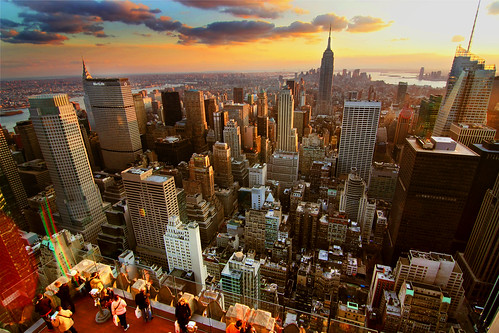
New York, here we come!
Hi everyone! I have all sorts of exciting things to share with you from my last month in Thailand, my weeks in Australia, and my experience coming home to the USA, but that will all have to wait, because I have BIG NEWS to share!
We're moving to NEW YORK CITY!
I've accepted a place at Columbia University to get an MA in International Affairs. It promises to open all the doors I want opened, and should set me up perfectly for my professional future. I'm thrilled! (Can-can dancing around the kitchen to Sinatra's "NY NY" with a glass of proseco in my hand.)
We're moving to NEW YORK CITY!
I've accepted a place at Columbia University to get an MA in International Affairs. It promises to open all the doors I want opened, and should set me up perfectly for my professional future. I'm thrilled! (Can-can dancing around the kitchen to Sinatra's "NY NY" with a glass of proseco in my hand.)
Sunday, April 11, 2010
leafing spring
Yes, we are alive. Yes, we are doing things. Specifically, we are figuring out our lives, and traveling around the country while doing so (with reason). More on all that soon.
In the small-scale, I took a walk by the Concord River this afternoon, and was delighted by the appearance of leaves. Photographic evidence, including an ode to a skunk-cabbage:
In the small-scale, I took a walk by the Concord River this afternoon, and was delighted by the appearance of leaves. Photographic evidence, including an ode to a skunk-cabbage:
Saturday, March 6, 2010
thank goodness I brought my plastic shoes to Melbourne
Early this week I got a suntan on my arms walking ten minutes to the post office on a cloudy day. You can therefore imagine my surprise when the heavens abruptly opened up today and a ridiculous freak storm of hail and rain flooded all of downtown and brought much of the state of Victoria to a standstill. We're talking serious hail here: most of the hail stones where I was were at least 12 millimeters, and some places saw hail the size of golf balls. This is not quite what one expects from a region currently experiencing its seventh year of drought.
I was in the center of the city when the hail started to fall. I quickly elected to stay put through the worst of the storm (not a tough call to make), boisterously congregating with my fellow shoppers amongst the stationary, souvenir T-shirts, and other odds and ends. The streets flooded. Rubbish bins and milk crates sailed down from Little Bourke street, turning right on Elizabeth and floating smoothly down towards Flinders Street Station. Every shop awning up and down the street began to leak (they're intended mostly to shelter from sunlight).
I found out later that the storm caused a disproportionately significant degree of damage given it's short duration. Hail stones smashed windows and damaged roofs throughout the region, and a number of people were injured when they couldn't get under cover.
Fortunately for me and those I was caught out with, people in our area nothing worse than mild discomfort and chill from literally wading through ice water. There's nothing like a bizzar, widespread, and disruptive but generally harmless shared experience to bring strangers together, and for us the rainstorm and its aftermath were consequently quite fun. Everyone had their phones and cameras out. We took pictures of each other and the half-submurged post boxes, exclaimed as the water level topped the bumper of the poor little Fiat just in front of us, and observed repeatedly how unusual this was for Melbourne.
I do hope the rain keeps up a bit, as Melbourne's water storages are currently at 34.6% of capacity. Much as I appreciate the rain, however, I think I personally will choose to stay out of it.
I was in the center of the city when the hail started to fall. I quickly elected to stay put through the worst of the storm (not a tough call to make), boisterously congregating with my fellow shoppers amongst the stationary, souvenir T-shirts, and other odds and ends. The streets flooded. Rubbish bins and milk crates sailed down from Little Bourke street, turning right on Elizabeth and floating smoothly down towards Flinders Street Station. Every shop awning up and down the street began to leak (they're intended mostly to shelter from sunlight).
I found out later that the storm caused a disproportionately significant degree of damage given it's short duration. Hail stones smashed windows and damaged roofs throughout the region, and a number of people were injured when they couldn't get under cover.
Fortunately for me and those I was caught out with, people in our area nothing worse than mild discomfort and chill from literally wading through ice water. There's nothing like a bizzar, widespread, and disruptive but generally harmless shared experience to bring strangers together, and for us the rainstorm and its aftermath were consequently quite fun. Everyone had their phones and cameras out. We took pictures of each other and the half-submurged post boxes, exclaimed as the water level topped the bumper of the poor little Fiat just in front of us, and observed repeatedly how unusual this was for Melbourne.
I do hope the rain keeps up a bit, as Melbourne's water storages are currently at 34.6% of capacity. Much as I appreciate the rain, however, I think I personally will choose to stay out of it.
Subscribe to:
Comments (Atom)